



Academics»Physics
learn-more-icon.gif

Student Profile

Tracy Moore Tracy Moore
Columbus, Ohio
Major: Physics
Minors: Studio Art

“The professors here are genuinely interested in seeing you succeed.”

Tracy Moore is interested in the problem solving and intricate explanation of the universe that her physics major offers.

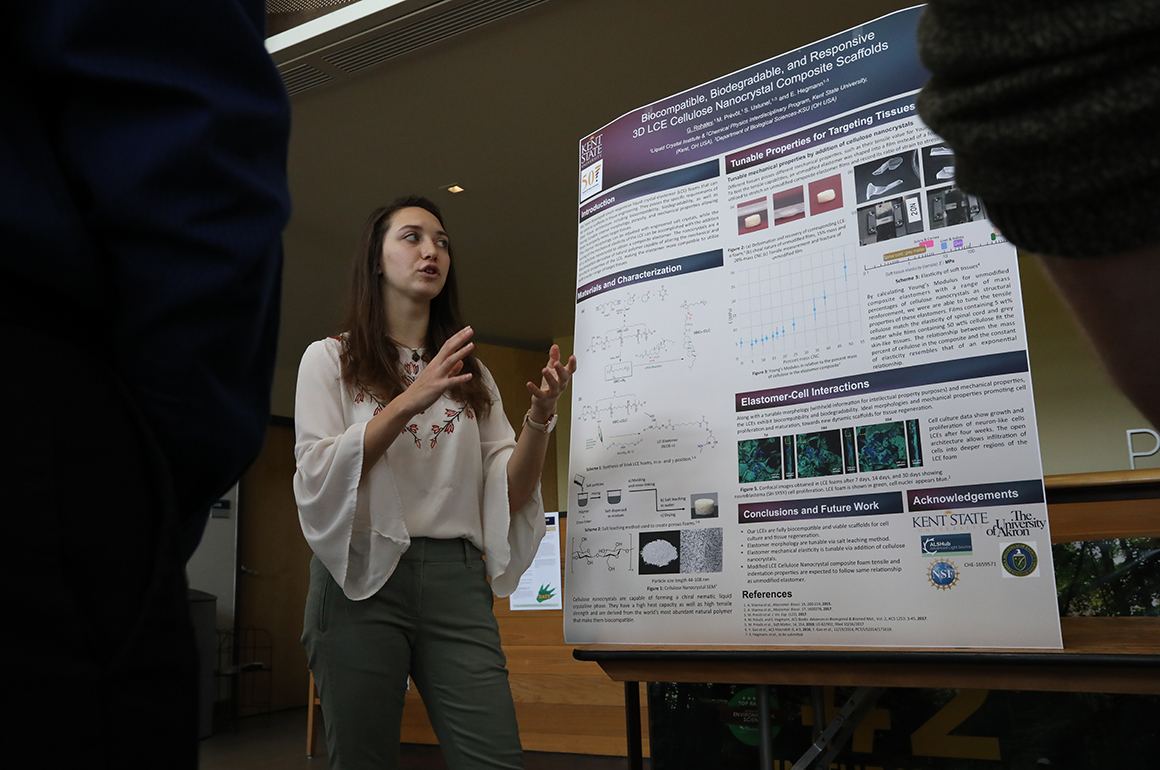
Thanks to hard work, some luck and the encouragement of the physics department faculty, Tracy is now able to contribute to physics research.

Learn more about Tracy here.

The Physics Department

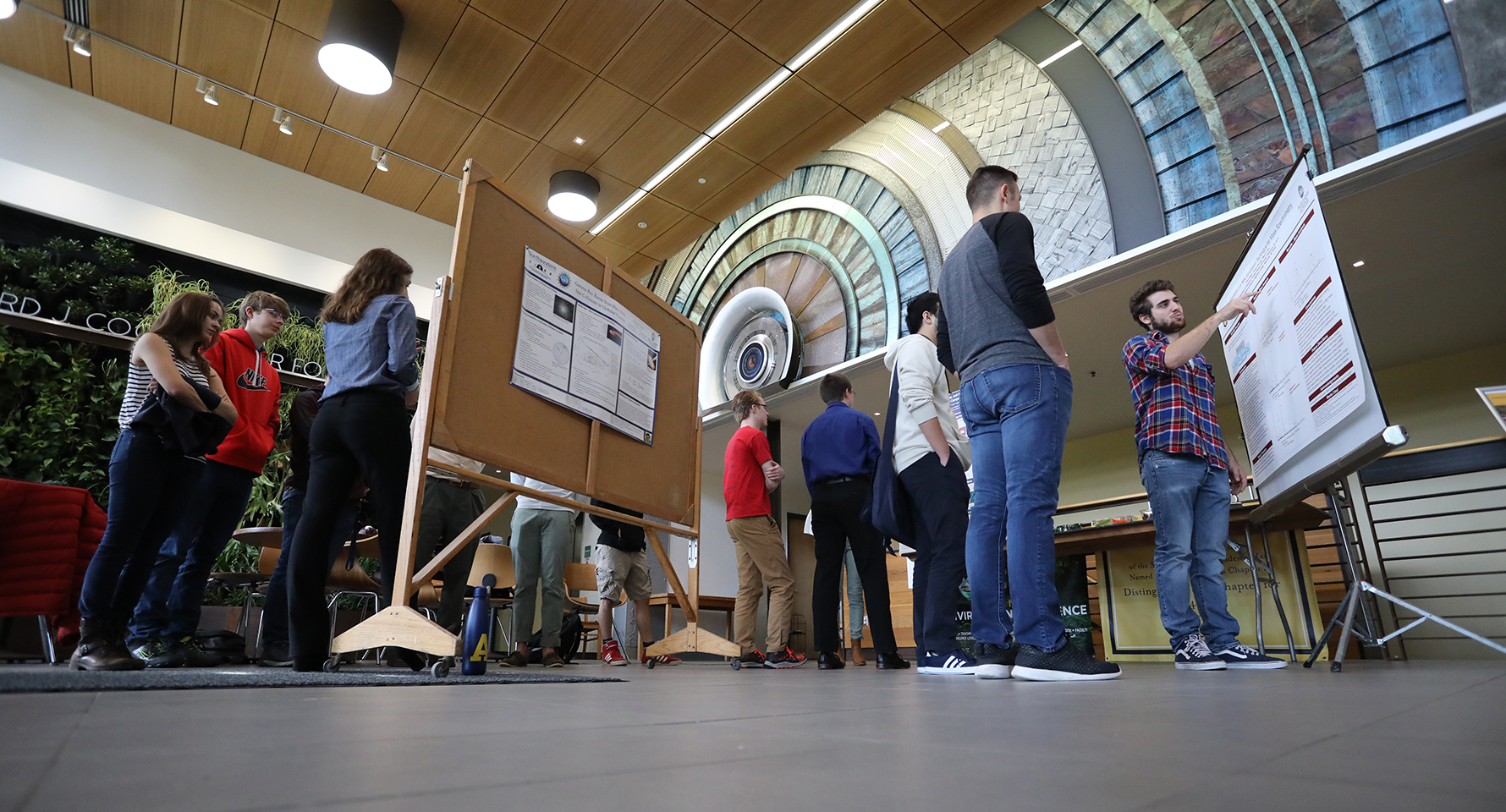
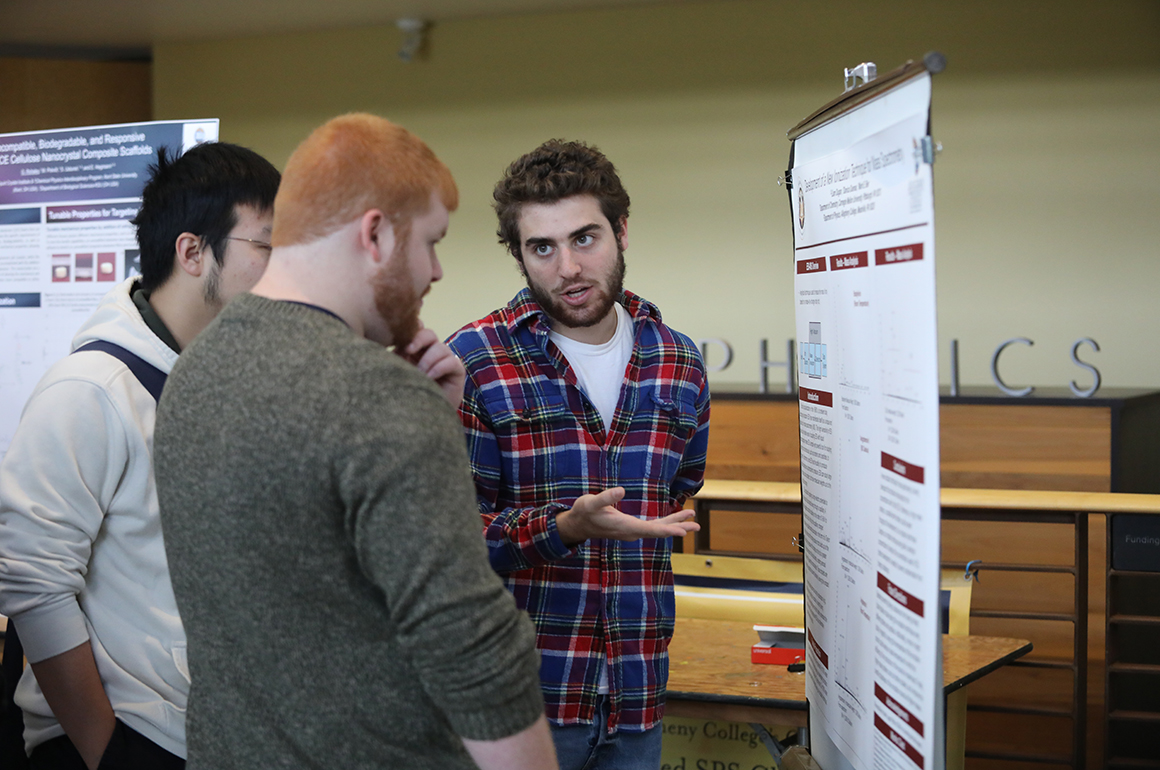
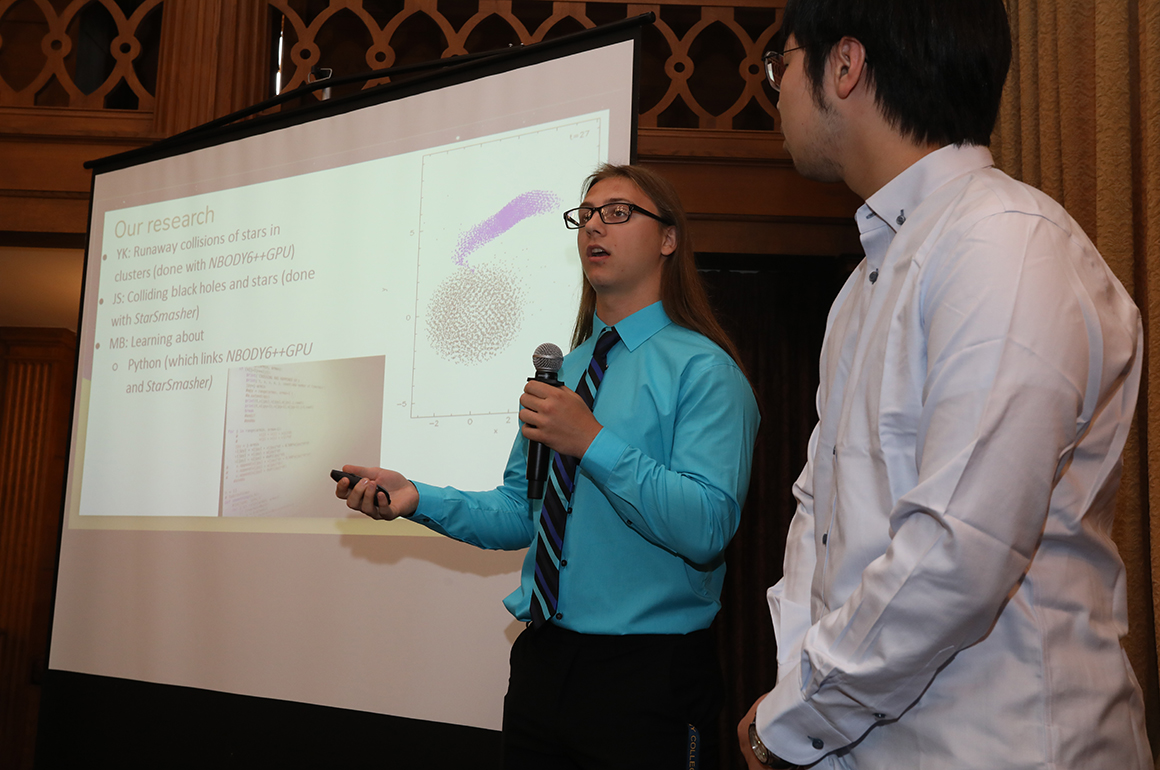
Allegheny's physics curriculum offers academic possibilities as varied and individual as the students themselves. Choosing from a pure physics curriculum or one of several interdisciplinary emphases, students select courses to meet their own interests and goals. Graduates of the program have become doctors, engineers, lawyers, professors, software designers, and research scientists with placements including the Central Intelligence Agency and NASA. Physics students experience the camaraderie of a supportive department that offers opportunities for close collaboration with faculty in cutting-edge research.

The Program

Allegheny's physics majors develop strong backgrounds in theoretical, experimental and computational physics, as well as a thorough understanding of the scientific method and an appreciation of the way the natural universe works. They are also encouraged to explore the impact of physics on the other sciences.

Double and student-designed majors are encouraged. Recently, double majors in physics/chemistry and physics/environmental science, and physics/mathematics have been especially popular. Student-designed programs may include emphases such as physics and biology and physics and music.

The physics department also offers a physics minor and an astronomy minor.

Emphases Within the Physics Department

Physics, as a scientific discipline, is necessarily interdisciplinary. It impacts all areas of science. The Physics Department encourages exploration of the interdisciplinary nature of physics through the design of emphases. These emphases do not amount to specialization. Rather, they examine the breadth that the science of physics has come to embrace. Students studying physics may design their own emphases, or they may choose one of the emphases described here.

Biophysics

Biophysics is an interdisciplinary field at the interface between biology and physics with connections to physical chemistry and biochemistry. Biophysicists apply the methods and techniques of physics to investigate complex biological systems and processes. This emphasis allows students to gain a thorough grounding in introductory physics, chemistry and biology with advanced courses in physics and special topics.

Chemical Physics

Chemical physics exists at the border between physics and chemistry, with applications that extend from biology to astronomy. Chemical physicists apply the principles and experimental methods of physics to probe and understand atomic, molecular, and chemical systems. Allegheny's chemical physics emphasis provides for a solid background in physics as well as in the fundamentals of chemistry, allowing students to explore nature from the perspective of both the physicist and the chemist, and advanced courses demonstrate topics of current interest to both.

Astrophysics

From the search for planets of other stars and life on other worlds, to the origin and ultimate fate of galaxies and even the entire universe, astrophysics addresses many of the greatest questions of modern science. The astrophysics emphasis prepares students for graduate school in astronomy / astrophysics, as well as careers in researching or writing about these great scientific issues of our time. In addition, many people are simply fascinated by space and the night sky, and from this interest go on to other scientific or teaching careers.

Applied Physics

Our applied physics emphasis helps prepare students for careers in which the principles and techniques of physics are used to solve engineering and interdisciplinary type problems. Beyond the physics core program, emphasis is placed on chemistry and solid-state physics and other areas such as optics, mechanics or electricity and magnetism depending on the interest of the student.