


Mathematics and Natural Sciences
Chemistry Major and Minor
Our Chemistry program sets students on a path of mastery of fundamental concepts of matter and provides hands-on lab experience. As you experiment and investigate, you’ll gain the knowledge and skills to be successful in a wide range of careers and graduate programs where you can solve challenging global problems.
Your Four-Year Journey
Students often combine a Chemistry major or minor with a major or minor in Economics, English, Music, Psychology, or Political Science.
Get started
Introductory courses open doors to advanced classes that will deepen your understanding of the field. Students with AP or transfer credits may have foundation courses waived, so they may begin in organic chemistry.

Refine your skills
Your second year courses will include Organic Chemistry I and the sophomore seminar, where you will learn to write and speak as a chemist. You’ll also begin to explore core courses in sub-disciplines like biochemistry and physical chemistry. Intermediate courses like Analytical Chemistry, Organic Chemistry II, and Multistep Synthesis are common options for spring semester sophomores. Participation in summer research with faculty is often a possibility.
Develop your passion
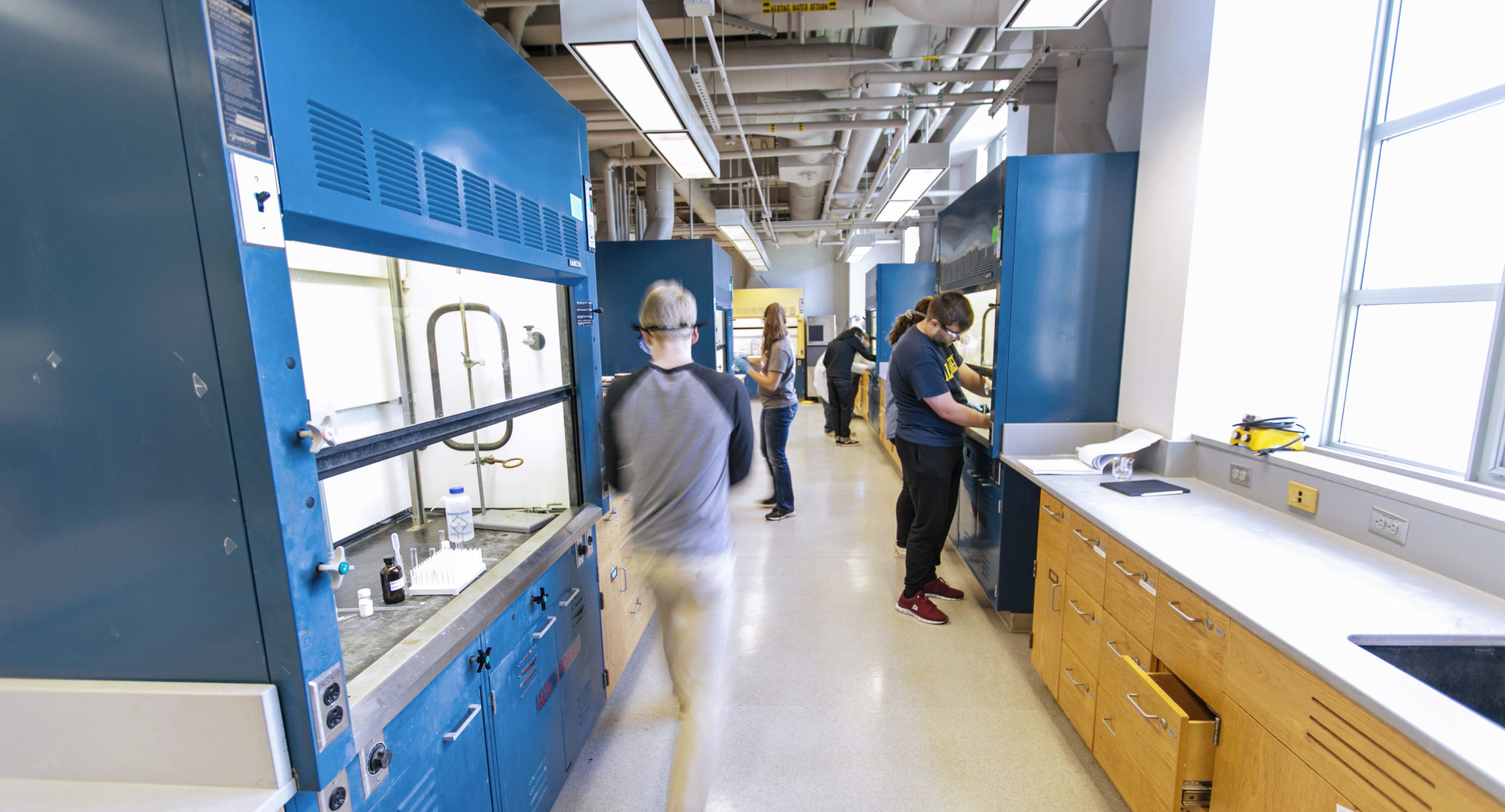
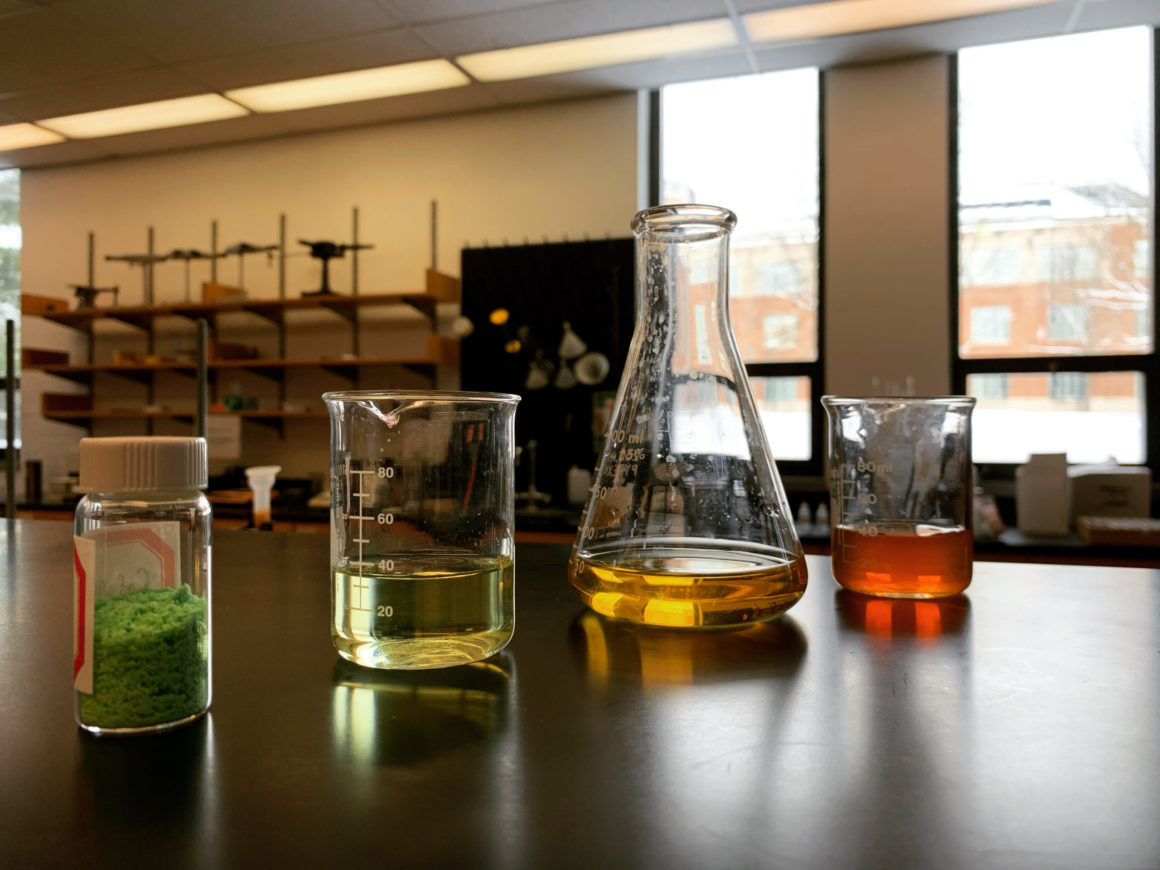
In your third year, you will begin to take advanced seminar courses in subdisciplines you find interesting while completing outstanding core courses like Inorganic Chemistry or intermediate courses like Quantum Chemistry or Biochemical Metabolism. You will enroll in the Junior Seminar, which builds on the work accomplished in your sophomore seminar, in preparation for your Senior Comp. Laboratory work emphasizes the transition from guided experiments to independent research projects.
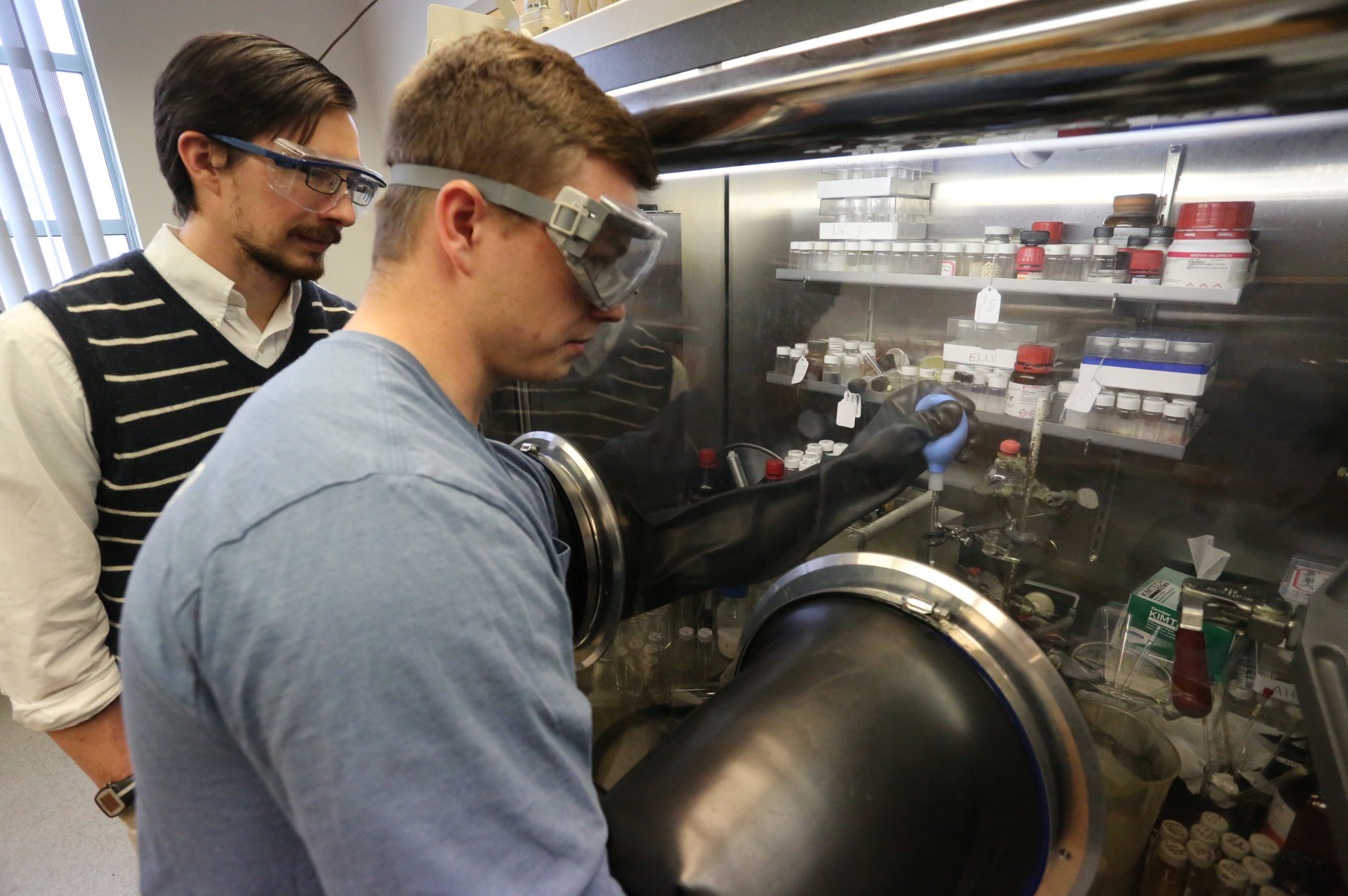
Demonstrate your knowledge and prepare for the next step
The focus of your senior year is the two-semester Senior Comp, which is carried out with close mentorship from a faculty advisor. Exemplary work can result in publication in chemical journals. You will also complete outstanding required courses for the major while applying to either graduate school, medical, dental, or veterinary school, or interviewing for a variety of positions in the chemical industry.
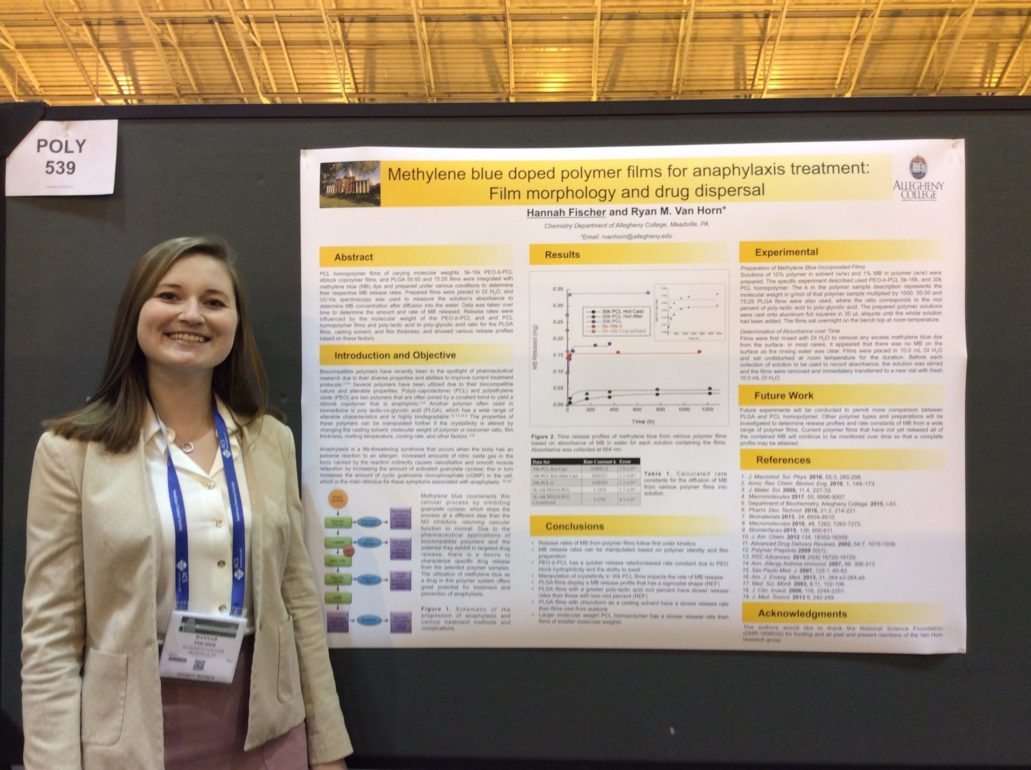
Alumni Careers — A Sampling
Justin Jurczyk, Alumnus
Chemistry Major/Economics Minor, Class of 2017; Ph.D. candidate at the University of California at Berkeley
“ In class, you are not just another number. Instead, professors truly want to see their students succeed and are willing to do whatever it takes to facilitate this success. Students can ask questions regarding any uncertainty in the material, but can also talk about how their day is going. Complementary to the intimate learning environment, the department also boasts a great appreciation for intellectual rigor. ”
Career Outcomes
93
of Allegheny graduates are employed, in grad school, or in full-time service within six months.
2
Program in the nation in producing eventual chemistry Ph.D.s
65–75
Of Allegheny Chemistry majors attend graduate or professional school.
Internship Opportunities
Oak Ridge National Lab
Funding provided by an Allegheny alumna University of Illinois Snyder Fellowship
REU (Research Experience for Undergraduates)
Funded by the National Science Foundation (NSF) at locations such as Arizona State University, University of Oregon, Montana State University, and the University of Pennsylvania
Bayer Agricultural
Summer internship
Parker-Lord
Summer internship
French Creek Distillery
Summer internship
On-Campus Research with Faculty
Funded by the Lord Charitable Trust, the Walsh Fund, and Allegheny’s URSCA